On October 19, a research achievement completed through collaboration between Associate Professor Wang Mingrui from the School of Future Technologies, NEU and a team from Tsinghua University was published online in the international academic journal Nature. The paper is titled “Cortex-wide imaging in naturally behaving mice with 1-gram wireless mesoscopes.” Associate Professor Wang Mingrui is the co‑first author of the paper. The research team developed Airscope, a wireless mesoscope weighing only 1.0 g (battery excluded). It combines AI-assisted optical design, advanced optical imaging, wireless transmission, and intelligent neural‑signal analysis, offering a new technical route to observe large‑scale cortical neural activity in free-ranging animals.
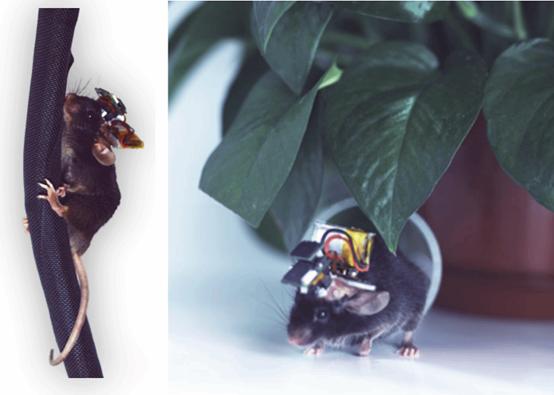
Figure 1 A mouse wearing Airscope can perform complex activities, including climbing and passing through tunnels.
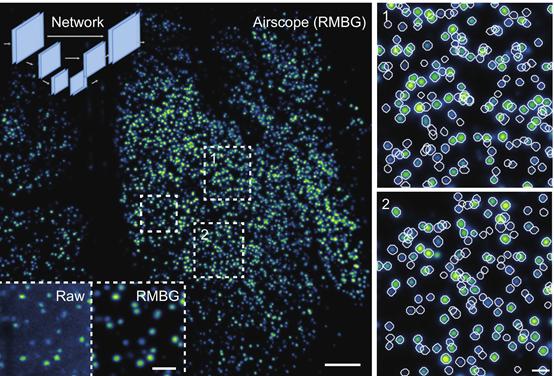
Figure 2 Large-scale neuronal activities and local identification results recorded by Airscope in a unilateral cerebral hemisphere of a mouse
In the above application studies, Associate Professor Wang Mingrui from the School of Future Technologies, NEU participated in device development and also conducted two representative experimental studies. One is whole-brain neural observation for free-ranging animals in naturalistic habitats; the other is simultaneous observation of cerebral cortex and spinal cord under fear-conditioning paradigm. The former focuses on how the brain dynamically changes with exploratory behaviors when animals enter more complex and naturalistic environments. The latter extends the observation range from the cerebral cortex to the spinal cord and attempts to analyze activity correlations among different regions of the nervous system on the same timescale. These two studies further demonstrate the research value of Airscope from the perspectives of real behavioral scenarios and cross‑region observation.
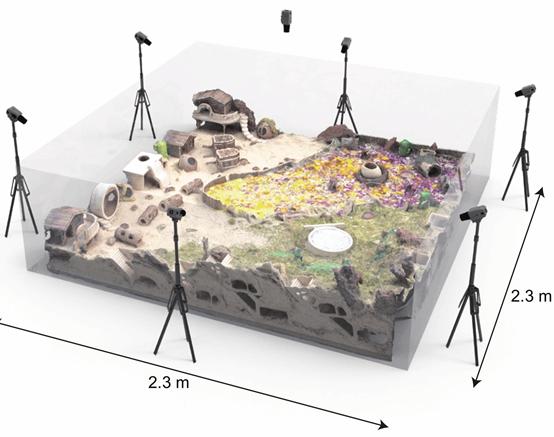
Figure 3 The 2.3 m × 2.3 m naturalistic habitat constructed by the research team for neural imaging of free-ranging animals in complex environments


